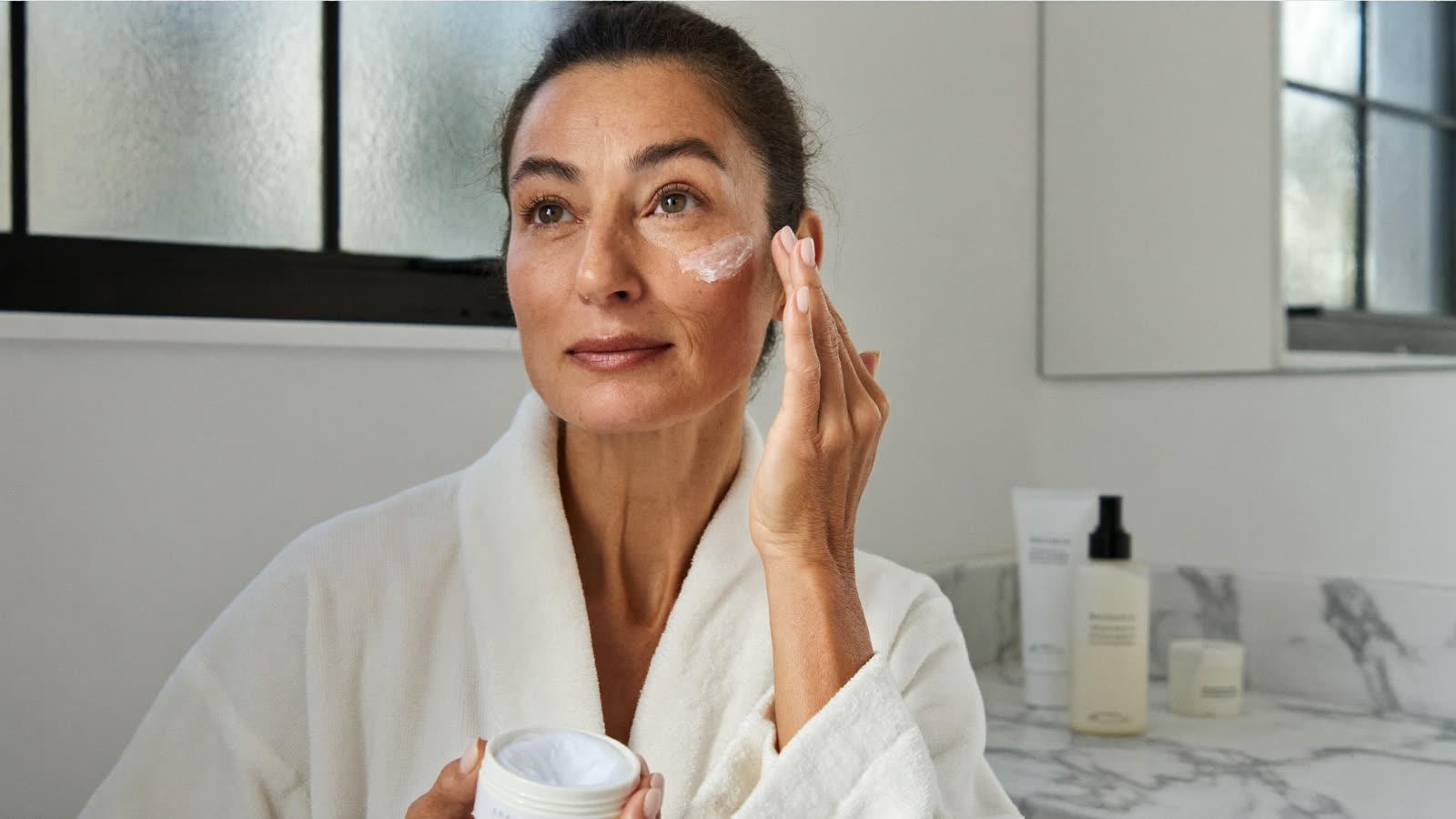
Retinol. Peptides. Vitamin C. Hyaluronic acid. Niacinamide. AHAs. Ceramides.
It's a lot.
And if you're like most women over 40, you've probably wondered: Do I actually need all of these? And if so, where do I even start?
I've been there. I spent years layering products without really understanding what any of them were doing—or whether they were working together or against each other.
So let me break it down for you. Here are the key anti-aging skincare ingredients that are actually worth your time and money after 40, what each one does, and how to use them without overwhelming your skin.
I'm Liz, I'm 48, and here on Stylish & Grateful we talk about how to look better, feel better and live better after 40.
Why Skincare Changes After 40
Before we get into ingredients, it helps to understand what's actually happening to your skin.
After 40—and especially after menopause—your skin goes through some real shifts:
- Collagen production slows down. You lose about 1% of your collagen per year after 30, and that pace accelerates after menopause.
- Cell turnover slows. Skin doesn't renew itself as quickly, which means dullness, uneven texture, and slower healing.
- Moisture retention decreases. Estrogen helps skin hold onto water. As estrogen drops, skin gets drier and thinner.
- Hyperpigmentation becomes more visible. Years of sun exposure start showing up as dark spots and uneven tone.
The good news? There are ingredients specifically designed to address every one of these changes.
The Ingredients That Actually Work
1. Retinol (and Retinoids)
If there's one ingredient that has the most research behind it for anti-aging, it's retinol.
Retinol is a form of vitamin A that works by speeding up cell turnover, stimulating collagen production, and fading dark spots over time.
The results are real—but so is the adjustment period.
When you first start using retinol, your skin may peel, get red, or feel sensitive. This is called the "retinol purge," and it's normal. The key is to start slow.
How to use it:
- Start with a low concentration (0.025% or 0.05%) two to three nights per week
- Apply to dry skin after cleansing, before moisturizer
- Always follow with SPF in the morning—retinol makes your skin more sun-sensitive
- Build up gradually to nightly use over several weeks
A note for sensitive skin: If retinol feels too harsh, look for retinaldehyde or bakuchiol, which are gentler alternatives with similar benefits.
2. Peptides
Peptides are short chains of amino acids—essentially the building blocks of proteins like collagen and elastin.
When applied topically, peptides signal your skin to produce more collagen. They're gentler than retinol and work beautifully as a complement to it.
How to use them:
- Look for peptides in serums or moisturizers
- They can be used morning and night
- Pair well with hyaluronic acid and niacinamide
Peptides are especially great if you're not ready for retinol yet, or if you want to layer both for maximum collagen support.
3. Vitamin C
Vitamin C is your skin's best friend for brightness and protection.
It's a powerful antioxidant that neutralizes free radicals (the environmental damage from sun, pollution, and stress), brightens dark spots, and boosts collagen synthesis.
How to use it:
- Apply in the morning, before sunscreen
- Look for L-ascorbic acid (the most potent form) at 10–20% concentration
- Store in a dark, cool place—vitamin C oxidizes quickly when exposed to light and air
- If your skin is sensitive, try vitamin C derivatives like ascorbyl glucoside, which are gentler
Pro tip: Vitamin C + SPF in the morning is one of the most powerful anti-aging combinations you can use.
4. Hyaluronic Acid
Hyaluronic acid is a humectant—meaning it draws moisture into the skin and holds it there.
One molecule of hyaluronic acid can hold up to 1,000 times its weight in water. After 40, when skin naturally loses moisture more easily, this ingredient is a game-changer for plumpness and comfort.
How to use it:
- Apply to slightly damp skin for best results
- Layer under your moisturizer to lock in hydration
- Safe for all skin types, including oily and acne-prone
- Can be used morning and night
5. Niacinamide
Niacinamide (vitamin B3) is one of the most versatile ingredients in skincare—and one of the most underrated.
It reduces the appearance of pores, fades dark spots, strengthens the skin barrier, controls oil, and reduces redness. It's also incredibly well-tolerated, even by sensitive skin.
How to use it:
- Works at any step in your routine—serum or moisturizer
- Can be used morning and night
- Pairs well with almost everything, including retinol and vitamin C
6. AHAs (Alpha Hydroxy Acids)
AHAs—like glycolic acid and lactic acid—are chemical exfoliants that dissolve the bonds between dead skin cells, revealing brighter, smoother skin underneath.
After 40, when cell turnover slows, regular exfoliation becomes more important. AHAs also help fade hyperpigmentation and improve the texture of skin.
How to use them:
- Use 1–3 times per week, not daily
- Apply at night (they increase sun sensitivity)
- Start with a lower concentration (5–10%) and work up
- Don't use on the same night as retinol until your skin is used to both
7. Ceramides
Ceramides are lipids that make up a large part of your skin's natural barrier. As we age, ceramide levels drop, which leads to dryness, sensitivity, and irritation.
Replenishing ceramides helps seal in moisture and protect skin from environmental damage.
How to use them:
- Look for ceramides in moisturizers and barrier repair creams
- Especially important if your skin feels tight, dry, or reactive
- Great for layering under or over other actives
How to Layer These Ingredients
Here's a simple morning and evening routine using these ingredients:
Morning:
- Cleanser
- Vitamin C serum
- Hyaluronic acid (on damp skin)
- Moisturizer with ceramides or peptides
- SPF 30 or higher
Evening:
- Cleanser
- Niacinamide serum (optional)
- Retinol (2–3x per week to start)
- Hyaluronic acid
- Moisturizer with ceramides or peptides
On nights you're not using retinol, you can swap in an AHA exfoliant 1–2 times per week.
The Most Important Rule
You don't need to use all of these at once.
In fact, starting with too many actives at the same time is one of the most common skincare mistakes—and it makes it impossible to know what's working and what's causing irritation.
Start with the basics:
- SPF every morning (non-negotiable)
- Vitamin C in the morning
- Retinol a few nights per week
- A good moisturizer with ceramides or hyaluronic acid
Once your skin has adjusted—usually after 4–6 weeks—you can add in peptides, niacinamide, or AHAs.
The best skincare routine is the one you'll actually stick to. Simple and consistent beats complicated and sporadic every time.
One More Thing
If you want a complete, step-by-step skincare routine designed specifically for women over 40—including exactly what to use, in what order, and what to avoid—I put it all together in my free guide.
It's called the Skincare Routine Guide for Women Over 40, and you can grab it below.
Get the Free Skincare Routine Guide →
The products I actually use for these ingredients are in my skincare favorites list on Amazon.
If you're a woman over 40 who wants to look better, feel better and live better, I'd love to have you join me here on Stylish & Grateful.
And tell me in the comments: Which of these ingredients are you already using—and which one are you going to add next?